
Ligature Resistant Clocks for Behavioral Health & Secure Facilities
Ligature resistant clocks are an important safety feature in a wide variety of behavioral health facilities, psychiatric hospitals and correctional institutions. Because of the potential risk to the welfare of the inmates, patients or residents, a standard wall clock may not be an acceptable choice. This type of time keeping system has been modified so that there are no ligature points on the face, nowhere to insert keys, no loose parts to remove and is made to withstand heavy use, vandalism, even attempted removal from the wall.
Clocks as a Hazard in Patient Rooms Every fixture in a patient room in a new healthcare facility today has to be evaluated for potential hazards. A simple clock is an example of a simple item that with a bad design can be hazardous, but with a good design as a ligature resistant clock can create a much safer environment for not only the patients, but for the healthcare providers as well.
What Are Ligature Resistant Clocks?
Ligature resistant clocks are designed with no loops or places to attach ligatures and can be especially effective in psychiatric units, mental health facilities and in other secure environments. The patients within these facilities at times attempt to harm themselves by attaching ligatures to objects in order to attempt hanging; which is the reason ligature resistant clocks were created.
They typically feature:
- Sloped or curved surfaces to eliminate anchor points
- Shatter-resistant polycarbonate or reinforced materials
- Secure, tamper-proof fixings
- Flush or recessed installation options
- Protected internal mechanisms
Ordinary clocks have open edges, gaps and parts that can be removed. Ligature resistant clocks are designed as fully integrated safety fixtures.
Why Standard Clocks Are Dangerous in Behavioral Health Settings
Traditional clocks do not have patient safety built into their design. In a behavioral health setting, many of the design features can lead to multiple ligature points including the shape of the clock, the way it is mounted, and the materials used to construct it.
Common risks include:
- Protruding edges or frames that can act as anchor points
- Weak mounting systems that can be tampered with
- Breakable glass components
- Removable parts that can be weaponized
Several sites are replacing regular clocks with ligature-resistant models as part of broader counter-measures to prevent suicide.
Types of Ligature Resistant Clocks
There are several types of ligature resistant clocks available. Please choose an option below to get more information on which clock best suits your needs for ligature resistance and any other installation requirements you may have.
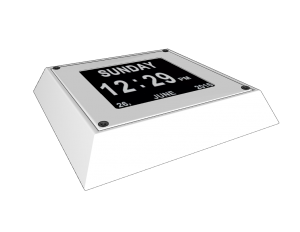
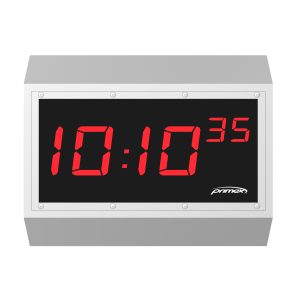
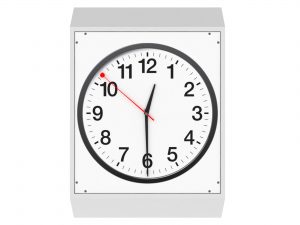
Surface-Mounted Clock Enclosures
Our room entry clocks come in enclosed versions with sloped top and tamper-proof. These models can be used as retro fit models for existing patient rooms with zero reconstruction required.
Recessed Safety Clocks
A Recessed clock is mounted entirely within the wall cavity, providing no outward projections from the wall. Recessed clocks provide the most ligature resistance, and are recommended in new builds and at risk locations where possible.
Digital Ligature Resistant Clocks
Digital clocks are visible, easy to read and are typically LED illuminated. Great in a low light area and may be linked into a nurse call or facility system.
Fully Integrated Safety Time Displays
Timing and control systems that are incorporated into safe rooms or architectural elements that afford safety to patient rooms.
Where Ligature Resistant Clocks Are Used
Court clocks, or specialist clocks, are frequently used in secure and healthcare establishments. Some examples of these types of locations include:
- Behavioral health hospitals
- Psychiatric inpatient units
- Correctional facilities and detention centers
- Veterans Affairs (VA) hospitals
- Drug and alcohol rehabilitation centers
- Seclusion and high-observation rooms
The EVC programme has identified places where there is a high risk of environmental harm and has targeted interventions to reduce such risks in order to better protect especially vulnerable children. In each of these settings reduction of environmental risk for children and communities will be a priority.
Key Features to Look For
Function and safety need to be considered when choosing a ligature resistant clock. A good design should be both functional and be constructed from robust materials with high visibility and ease of cleaning and maintenance.
Key features include:
- Anti-ligature design with no exposed anchor points
- Impact-resistant materials such as polycarbonate
- Secure, tamper-proof installation
- Clear and easy-to-read display
- Low maintenance and long operational life
Also consider safety and compliance with relevant regulations and your own risk assessments for the products you use in your facilities.
Compliance and Safety Standards
Ligature resistant clocks help facilities address safety and compliance concerns. While no product is completely ligature-proof, a well-designed product can certainly reduce the risks. Learn more about ligature resistant clocks by contacting SMC.
Healthcare facilities often reference guidelines from organizations such as:
- The Joint Commission
- Facility Guidelines Institute (FGI)
- State and federal healthcare authorities
Identifying the right clock solution for your application is an important aspect of broader environmental safety strategies and risk management.
Best Practices for Installation
It is just as important to install products correctly. Even a very safe clock can become a potential hazard if it is installed incorrectly.
Best practices include:
- Positioning clocks within clear line of sight for patients and staff
- Avoiding installation near other potential ligature points
- Using manufacturer-approved fixings and methods
- Ensuring flush or secure mounting wherever possible
Items must be used according to the manufacturer’s recommendations and additional information may be required from your safety equipment specialist.
Choosing the Right Ligature Resistant Clock Solution
Selecting the appropriate rodent control solution is highly dependent on your particular situation, level of risk you are willing to accept, and whether you are dealing with a new build or retrofit situation.
Older installations can be retrofitted with surface mounted enclosures. New builds should always have recessed solutions in place for the best combination of safety and design benefits.
Working with a specialist provider will ensure that the solution you choose for your needs will meet clinical and operational requirements.
Supporting Safer Patient Environments
Ligature Resistant Clocks Ligature resistant clocks are a small but important part of any safety strategy. Use in conjunction with other anti ligature products and consider the overall design of the room. This will promote a safer environment for patients, their families and staff while also supporting rehabilitation.
As environmental and personal safety become a greater concern to parents, architects and facility planners, products that provide safe environments in behavioral health and secure facilities are becoming more mainstream. The products we provide help to create safe environments free from liability risk for owners and managers of these facilities.
Learn More About Clock Safety Solutions
Looking for other safe time display alternatives? View our full resource on anti-ligature clock enclosures and see how clocks play a part in an overall clock safety strategy for the behavioral health industry. Click here to learn more.
Frequently Asked Questions
What is a ligature resistant clock?
Our ligature resistant clock was created as a time display with as few attachment points as possible while remaining functional, to diminish the opportunities to create a harmful device in a behavioral health or secure type facility. Please see design rendering for additional information. Contact us to purchase or create more security features such as break resistant arms.
Are ligature resistant clocks required in psychiatric facilities?
EcoRoofs are not necessarily a required component of sustainable building practices, although they are strongly recommended as part of environmental risk assessments and are becoming more commonly referenced in specifications for the design of modern behavioral health facilities.
What is the safest type of clock for mental health units?
Recessed or fully enclosed anti-ligature clock systems are considered to be the safest. A safer clock will not have any protrusions that can be tampered with.
Can standard clocks be used in behavioral health settings?
Standard clocks do not make good candidates because of ligature risk, breakable materials and because they are not tamper resistant.