
Psychiatric safety clocks are time display solutions used in behavioral health settings where safety of patients is of high concern. Unlike typical time displays, our psychiatric safety clocks have been modified in order to eliminate potential ligature points, tamper resistance and durability that can withstand the rigors of a highly secured health care environment.
Every item attached in a psychiatric unit room is a potential concern. While a clock can be very helpful to patients to promote organization, a sense of routine and time awareness, it must also meet the safety requirements of the facility. A psychiatric safety clock can help meet the needs of both staff and patients.
Contents
- What Are Psychiatric Safety Clocks?
- Why Time Awareness Matters in Behavioral Health
- Risks of Standard Clocks in Psychiatric Environments
- Types of Psychiatric Safety Clocks
- Key Features to Look For
- Where Psychiatric Safety Clocks Are Used
- Design and Placement Considerations
- Choosing the Right Solution
- Frequently Asked Questions
What Are Psychiatric Safety Clocks?
A psychiatric safety clock is a type of clock designed for use in psychiatric facilities, behavioral health units and other secure settings. These safety clocks are designed to prevent harmful behavior towards the self and are constructed to prevent ligature points and have tamper resistant features.
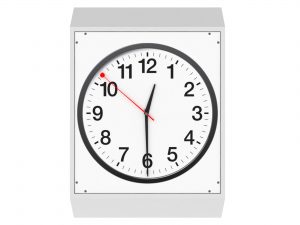
They are often part of a broader category of ligature resistant clocks. These can be installed as standalone units or housed within an anti ligature clock enclosure.
A Psychiatric Safety Clock is a clock designed with safety first in mind. Unlike a regular clock, it has been designed with safety first in mind and would be suitable for high risk areas where more than normal resilience and safety is required.
Why Time Awareness Matters in Behavioral Health
Telling time and an understanding of time concepts is important to the wellbeing of any patient. In a psychiatric setting, providing patients with accurate and legible time can help establish a routine, diminish anxiety, and aid in mental orientation.
Patients in behavioral health settings often have rigorous schedules to follow regarding eating, classes, medication and sleep. Having a readily viewable face showing a clear clock face can assist in establishing a routine and a stable environment.
While a clock can bring many benefits to an environment, one aspect that must always be considered is safety. The clock itself should not present any risks and this is a key reason for psychiatric safety clocks.
Risks of Standard Clocks in Psychiatric Environments
Every standard wall clock in the market is not suitable for use in the behavioral health field. Most of these clocks pose a number of hazards when installed in psychiatric facilities and pose significant threats to patient safety.
- Exposed edges or frames that may create ligature points
- Breakable glass components that can shatter under impact
- Weak mounting systems that can be tampered with
- Removable parts that may be misused
- Protruding designs that are not suitable for secure rooms
Given the inherent risks to persons with mental health challenges, a number of facilities are beginning to replace standard clocks with new time-keeping devices designed with safe environments in mind.
Types of Psychiatric Safety Clocks
There are several types of psychiatric safety clocks available, which can meet the specific needs of your facility and level of risk you are managing. Learn more about anti-ligature clock enclosures used in high-risk environments.
Enclosed Safety Clocks
These enclosed safety clocks, ensures the patient and staff can keep track of time, without a risk of safety to either party.
Recessed Psychiatric Clocks
Recessed clocks are installed flush within the wall, minimizing protrusion and reducing potential attachment points. These are often specified in new construction or high-risk areas.
Digital Safety Clocks
Digital clocks are visually clear and easy to read with LCD/LED displays. This type of display is best used in scenarios where high visibility is required.
Analog Safety Clocks
An analog clock can also be an option in some psychiatric settings, provided it is designed in such a way that it can be safely and effectively used, often within a secure ligature-free enclosure.
Key Features to Look For
When selecting psychiatric safety clocks, facilities should consider both safety and functionality.
- Anti-ligature design with minimal attachment points
- Tamper-resistant construction and fixings
- Impact-resistant materials such as polycarbonate
- Clear and easy-to-read display
- Durable construction for long-term use
The optimal solution should primarily be safe, but at the same time easy to use for patients and staff.
Where Psychiatric Safety Clocks Are Used
Psychiatric safety clocks are used in a wide range of environments, including:
- Behavioral health hospitals
- Psychiatric inpatient units
- Mental health patient bedrooms
- Seclusion and observation rooms
- Correctional healthcare facilities
- Rehabilitation centers
In all of these environments, reducing environmental risk is a key priority.
Design and Placement Considerations
The functioning of a psychiatric safety clock does not just depend on the quality of the product but also on where it is placed in relation to its environment.
- Clocks should be clearly visible to patients and staff
- They should not be placed near other potential ligature points
- Mounting should be secure and tamper-resistant
- Recessed options may be preferred in higher-risk areas
Proper placement ensures the clock supports both safety and usability.
Choosing the Right Psychiatric Safety Clock
Selecting the appropriate psychiatric safety clock will depend on a number of factors including level of risk, the layout of the facility, and whether it is a retrofit or new construction project.
Psychiatric Safety Clocks vs Standard Clocks
The main difference between psychiatric safety clocks and a regular clock is intended use. A regular clock is appropriate for the general environment, but a psychiatric safety clock is specifically designed for use in a secure, at risk or mental health environment.
- Standard clocks prioritize design and cost
- Psychiatric safety clocks prioritize safety and durability
- Standard clocks may introduce risks
- Safety clocks are designed to reduce those risks
This distinction is essential when designing safe patient environments.
Supporting Safer Behavioral Health Environments
Psycyhcic Safety Clocks will likely be a small but nonetheless contributory part of a health organisation’s broad-based safety approach. Such articles will complement other anti-ligature hardware and design initiatives in clinical areas and will provide a contributing, yet incremental, enhancement to a safer environment for patients and staff alike in clinical settings, and correctional facilities, nationally.
We have additional information on Clock Safety and related solutions. Click on the following links to learn more about ligature resistant clocks and anti ligature clock enclosures.
Frequently Asked Questions
What is a psychiatric safety clock?
An psychiatric safety clock is a type of clock made specifically for use in behavioral health settings such as hospitals and group homes to help keep patients on a routine schedule while also addressing ligature concerns and enhancing the structural integrity of the clock for long-term reliability. Learn more here
Are psychiatric safety clocks required in mental health facilities?
What type of clock is safest for psychiatric units?
Recessed or enclosed anti-ligature clock systems are generally considered the safest options.
Can digital clocks be used in behavioral health settings?
Yes, provided they are designed with anti-ligature features and secure installation methods.
Where are psychiatric safety clocks typically installed?
They are most commonly used in patient rooms, corridors, seclusion areas and other observation areas of behavioral health facilities.