
A question asked frequently, is “are wall clocks a ligature risk?”. Well, let’s dive in…
Wall clocks are a common feature in almost every building, from offices and schools to hospitals and public spaces. However, in behavioral health environments, something as simple as a wall clock can present a serious ligature risk if it is not designed or installed correctly. While they may appear harmless, standard clocks often include features that make them unsuitable for high-risk psychiatric settings.
Understanding whether wall clocks are a ligature risk is essential for architects, facility managers, and healthcare professionals responsible for creating safe patient environments.
What Is a Ligature Risk?
A ligature risk refers to any fixed point in a room where an item such as clothing, bedding, or cords could be attached or secured. In behavioral health facilities, reducing these risks is a key part of environmental safety planning. Every fixture within a patient room must be assessed not only individually but also in relation to surrounding elements.
Even small design features can create unintended risks when combined with other items in the room. This is why careful product selection and placement are critical.
Why Standard Wall Clocks Are A Ligature Risk
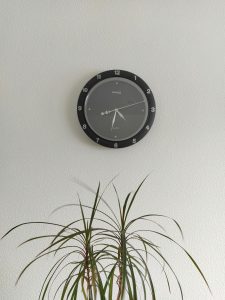
Most standard wall clocks are designed for general use and are not built with safety in mind. As a result, they often include features that can introduce ligature risks in psychiatric environments.
- Protruding frames: Raised edges or lips can act as anchor points
- Gaps behind the clock: Space between the wall and the unit can allow items to be looped or secured
- Breakable materials: Glass covers can shatter, creating additional hazards
- Weak mounting systems: Clocks can be removed or tampered with if not securely fixed
Individually, these may seem minor. However, in a behavioral health setting, they can combine to create significant risk. This is why many facilities now avoid using standard clocks altogether.
Design Is the Key Factor
It is important to understand that not all wall-mounted clocks are unsafe. The issue lies in the design, not the concept. A clock that is specifically engineered for behavioral health use can significantly reduce these risks.
Modern ligature resistant clocks are designed with safety as the primary focus. These solutions eliminate common ligature points, use durable materials, and incorporate secure installation methods.
In many cases, facilities also use anti ligature clock enclosures, which provide an additional layer of protection by housing the clock within a secure, sloped enclosure.
The Role of Placement in Risk Reduction
Even the safest clock can become a risk if it is installed incorrectly. Placement plays a key role in ensuring overall safety within the room.
Clocks should be positioned away from other fixtures that could increase risk when combined. For example, installing a clock too close to shelving, door hardware, or other protrusions can create unintended opportunities for misuse.
To understand this in more detail, see our guide on clock placement in psychiatric patient rooms, which outlines best practices for safe positioning.
Safer Alternatives for Behavioral Health Facilities
To reduce risk, facilities are increasingly specifying clocks that are purpose-built for secure environments. These include:
- Recessed clocks that sit flush with the wall
- Enclosed clocks with sloped, anti-ligature designs
- Digital clocks with protected displays
Many of these fall under the category of psychiatric safety clocks, which are designed specifically for mental health and secure care environments.
Balancing Safety and Functionality
Clocks are not optional in most healthcare environments. They play an important role in supporting routine, helping patients understand time, and assisting staff with daily operations.
The challenge is ensuring that this essential function is provided without introducing unnecessary risk. By choosing the right design and installing it correctly, facilities can achieve both safety and usability.
Conclusion
So, are wall clocks a ligature risk? The answer is yes—if they are not designed for the environment in which they are used. Standard clocks can introduce multiple hazards in behavioral health settings, but purpose-built solutions can significantly reduce these risks.
By selecting appropriate products, considering placement, and following safety-focused design principles, facilities can provide clear time display while maintaining a safer patient environment.
Related Content
Ligature Resistant Clocks for Behavioral Health & Secure Facilities