
Understanding why standard clocks are dangerous in behavioral health facilities is a must for facility management.
At first glance, a standard wall clock may seem like a harmless and necessary addition to any room. However, in behavioral health and psychiatric environments, standard clocks can introduce a range of safety risks that are often overlooked.
Identifying, prioritizing and managing medical device hazards is critical to anyone involved in design of facilities, patient safety and health care operations.
Designed for Convenience, Not Safety
Ordinary residential clocks, such as those that hang on a wall or sit on a desk, are made primarily to look attractive, to be reasonably priced, to be easy to install and to perform their principal function to the correct time. They have not been designed with safety in mind.
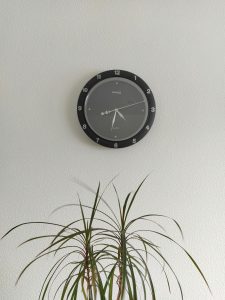
In behavioral health environments, this creates a problem. Fixtures that are perfectly acceptable in everyday settings can become hazards in high-risk patient areas.
Common Safety Risks of Standard Clocks
Several design features of ordinary clocks present potential ligature risks or safety hazards.
Protruding Frames and Edges
Some everyday objects present unique hazards. Several types of clocks have raised frames or edges that can be used for mounting. Obviously, these are innocuous features in a number of settings. However, in a psychiatric environment, the potential for harm can be considerable.
Breakable Glass Covers
Many standard clocks have glass faces which are vulnerable to impact and may break up into sharp edges creating a new hazard in the room.
Weak Mounting Systems
Clocks intended for ordinary positions are often secured to the floor or to a partition using only a standard fixing and can be easily detached or altered which increases the danger of damage.
Removable Components
Some clock parts may be removable or easy to break off and could potentially be used as other items in the habitat.
Why These Risks Matter
Every aspect of the environment in a behavioral health setting must be assessed as part of the overall safety plan. The potential for injury to clients and staff from even low-level hazards can be amplified when combined with other factors.
Reducing exposure to environmental hazards in the healthcare setting is an important aspect of ensuring the patient environment is safe. This includes replacing existing items with specialized fixtures, objects or products that meet particular criteria for safety.
Safer Alternatives for Behavioral Health Facilities
The growing prevalence of the self harm trend has led to facilities seeking means to deter such actions. Means have been implemented in attempts to counteract this trend, with specialist products such as ligature resistant clocks specified, and anti ligature clock enclosures installed.
These solutions are designed specifically for high-risk environments and include features such as:
- Sloped surfaces to reduce attachment points
- Impact-resistant materials
- Secure, tamper-proof fixings
- Flush or recessed installation options
The Shift Toward Safer Design
Increasingly, people are becoming more aware of the importance of safety when it comes to the environment. We are seeing more and more buildings moving away from standard products and exploring safer alternatives specific to the unique demands of a behavioral health facility. Contact us to learn more
Healthcare safety is evolving with greater recognition that the safety of the care environment must be designed into the setting, rather than being simply something that is later added.
Conclusion
The standard clocks available to be placed on the walls of the facilities do not provide any benefit in a behavioral health setting and in some cases can present a hazard to the client and or staff. A purpose built safety clock should be used instead, as recommended by The Joint Commission.
From door access and room timing to healthcare charging stations and temperature monitoring, the right clock systems can deliver a high level of functionality that contributes to safer, more secure care environments for patients.